Lean E-Commerce: Applying Lean Startup Principles to E-Commerce
Written by The Kickflip Team
February 7th, 2024

Table Of Contents
If you’re seeking faster growth for your ecommerce business with lower risks, lean ecommerce principles will help. High competition, rising costs, and fears about building the wrong product can place great strain on an ecommerce business. However, lean startup principles eliminate the need for traditional business plans and time-consuming practices and can help you reduce costs while nurturing faster growth based on customer demand. Lean startups develop and optimize business by applying principles of rapid iteration, validated learning, and data-driven decision-making. Lean startup principles aim to minimize waste, reduce risk, and accelerate growth by focusing on what truly resonates with customers and cutting out anything that doesn’t.
According to Harvard Business Review, the lean startup “favors experimentation over elaborate planning, customer feedback over intuition, and iterative design over traditional ‘big design up front’ development.” By applying the principles of lean startups to your ecommerce business, you can exponentially increase your profits while decreasing costs and time spent on traditional business practices. This guide will go over the principles of lean startups and offer tips for applying them to your e-commerce business.
What Is a Lean Startup?
A lean startup is a method of introducing a new product within an existing company or founding a new company. Traditional business practices employ a lengthy business plan that often has minimal feedback from potential customers. This can lead to high costs and time investments to create products that often aren’t in demand. According to researchers, about 80% of e-commerce businesses fail. Traditional business practices that do not take into account customer demand while spending large amounts on product development and marketing can lead to startup failure.
A lean startup, on the other hand, focuses on developing products that consumers want so there is demand for the product as soon as it hits the market. This helps reduce costs and time launching unsuccessful products while ensuring a fast production process. Lean startups use continuous feedback and improvement to develop and fine-tune products for successful reception and growth. For lean e-commerce businesses, this means creating simple yet effective initial products to gain customer feedback and insights and adapting products and strategies to meet areas of highest market demand.
What is Lean Ecommerce?
Lean e-commerce is a business strategy that applies the core principles of lean startup to the world of online business. It focuses on efficiency, agility, and data-driven decision-making to maximize growth and minimize risk. Lean ecommerce allows you to tap into consumer demand and create and adapt products quickly to meet existing needs in the marketplace.
Lean ecommerce business models launch sleek, simple websites and products, continuously gather customer feedback to create additional features and offerings, and trim unwanted products or features.
Lean Startup Principles
Lean startups operate by a different paradigm than other business models. These are some of the core tenets of lean startups and ways you can incorporate them to create a lean ecommerce business:
Minimal Viable Product (MVP)
A minimal viable product (MVP) is the simplest version of your product that can still be used by early adopters and provide valuable data about its potential. This version of your product does not have to include the most features or customization options but instead has the basic functions your product needs.
The concept MVP is often misunderstood as the simplest or cheapest version that can be launched. However, the essence of an MVP is to create a product iteration that, despite being minimal, still delivers enough value to attract early adopters and allows you to gather valuable insights into customer preferences and behaviors.
To use MVP for your ecommerce business, you can start with a basic version of your online store. Test core functionalities quickly and gather real customer feedback before investing heavily in full-fledged features. You’ll learn quickly from customer interactions without forking over the costs of a comprehensive store up front.
Build-Measure-Learn-Loop
Another central practice in lean startups is the build-measure-learn-loop. This process helps you develop and assess your product and learn from customer feedback. This systematic approach helps you iterate, test, and optimize your online store based on data and customer feedback. Here are the steps in the process:
Build: In this phase, you develop the initial features of your ecommerce site based on your understanding of what customers want.
Measure: Use analytics tools to track customer behavior on your site. This will help you assess and learn what works and what doesn’t based on real customer behavior.
Learn: Analyze and interpret your findings. Draw conclusions about the effectiveness of your website. Then you can take action based on customer data and update your site to best serve their needs.
Pivot or Persevere
Based on your build-measure-learn-loop, you can decide whether to pivot or persevere. There may be products or features on your site that do not perform well with customers, and you can trim these. On the other hand, you may find an unexpected product or feature that customers love and pivot to focus more on fine-tuning and scaling that offering.
Customer Feedback
Customer feedback is crucial for any lean ecommerce business to thrive. This feedback plays a vital role in every stage of a lean startup, acting as a compass guiding the direction of the business and informing crucial decisions. Before building a comprehensive ecommerce site, gather initial feedback on your proposed site and business focus to gauge market interest and assess the problem your solution addresses. Use surveys, interviews, and focus groups to tap into customers’ wants and needs. You can also use social media to get insights and thoughts from customers.
Lean Marketing
Lean marketing involves doing more for less money but with smart, data-informed strategies. It emphasizes efficiency, data-driven decision-making, and achieving maximum impact with minimal resources. For a lean e-commerce business, focus on low-cost, high-impact marketing strategies with tools like social media marketing, content marketing, and influencer partnerships.
Monitor the impact of your lean marketing efforts using data-driven analytics. You can adjust your marketing strategy to focus on what brings the best ROI.
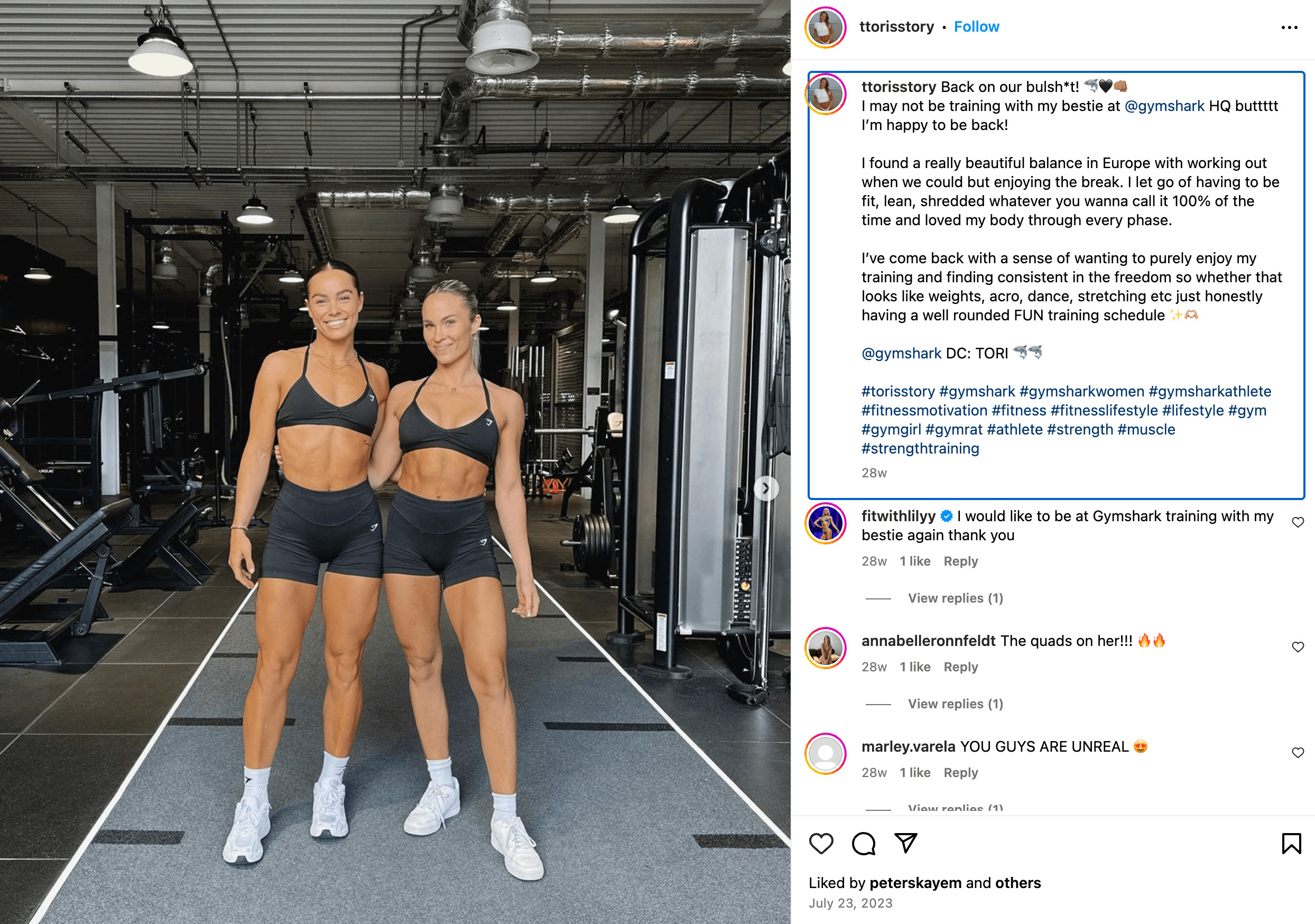
Gymshark's success in e-commerce is a prime example of lean marketing, leveraging social media influencers, engaging online content, and community-focused events to build a powerful brand presence on a budget. By partnering with fitness influencers and fostering a strong online community, Gymshark efficiently reached their target audience without the high costs associated with traditional advertising. Their strategy of prioritizing customer feedback and creating authentic connections through social media and pop-up events showcased the effectiveness of lean marketing principles. This approach not only helped Gymshark grow into a globally recognized brand but also demonstrated the value of resourcefulness, customer engagement, and community building in achieving e-commerce success.
On-demand production
A key cost-cutting component of the lean startup is managing inventory well. The last thing you want is to have an expensive stock room full of products that no one is buying. To avoid that, lean ecommerce businesses use data insights and analytics to order inventory based on what's selling.
Another excellent method to keep your inventory low is to use on-demand production. Think of a pizzeria. It only cooks a pizza when an order is placed - that's the essence of on-demand production. It allows ecommerce businesses to hold their horses on manufacturing until an order is received.
Product customization
On-demand production closely aligns with the concept of product customization. When manufacturing is triggered by actual orders, businesses can offer a level of customization traditionally not feasible with pre-made inventories. Bringing back the pizzeria analogy, customers can order a pizza with their preferred toppings, and the pizzeria will make it fresh just for them. As customers increasingly seek unique products that reflect their personal preferences, on-demand production empoweers ecommerce businesses to be agile and responsive in catering to this demand without the risks and costs associated with overproduction and surplus inventory.
To effectively enable on-demand production while meeting the modern consumer's demand for customization, a product configurator is a must have for lean ecommerce businesses. It serves as an interactive interface that allows customers to personalize their products according to their preferences.
Kickflip stands out as an optimal solution for lean ecommerce businesses focused on on-demand production. It allows you to create wonderful product configurators to sell custom products online. Its user-friendly interface ensures smooth integration with Shopify and various other e-commerce systems, making it a comprehensive solution for startups aiming to tap into on-demand manufacturing. In keeping with the principles of a lean startup, Kickflip also allows for frequent iteration and enhancement of your configurator. This ensures that your business can quickly respond to consumer trends, feedback, and changes in the market.
The Dodocase example
Dodocase exemplifies the successful application of on-demand manufacturing within the e-commerce sector, leveraging Lean Startup principles to carve out a niche in the competitive tech accessories market. By allowing customers to personalize phone cases and tech accessories through an online platform built with Kickflip, Dodocase effectively minimized inventory risks and waste while maximizing customer satisfaction and engagement. This customer-centric approach, coupled with a production model that creates products only upon order, enabled Dodocase to rapidly respond to trends and feedback, fostering continuous product iteration and improvement.

Conclusion
In essence, the Lean Startup method is a powerful roadmap for entrepreneurs aiming to thrive in the dynamic e-commerce landscape. It emphasizes the importance of customer feedback, rapid prototyping with Minimal Viable Products, and a cycle of continuous iteration through the Build-Measure-Learn loop. This approach minimizes risk and ensures that businesses remain agile, responsive to customer needs, and capable of pivoting when necessary. Lean Ecommerce applies these principles to online ventures, advocating for efficiency, adaptability, and a customer-first mindset. By adopting these strategies, startups can navigate the complexities of the digital market with greater confidence and success, staying lean, competitive, and relevant in an ever-evolving economy.
Cover photo by Isaac Smith
Future reading
How to Create and Sell Custom Products Online
Ecommerce Personalization’s Benefits: The Best Practices
Getting Your First Sales When Launching Your Ecommerce
Share This article

Written by The Kickflip Team
February 7th, 2024
The Kickflip team is made up of ecommerce specialists, product experts, and engineers behind Kickflip, a product configurator platform for Shopify, WooCommerce, and Wix. Since 2010, we’ve helped thousands of brands scale personalized product experiences, from startups to Fortune 500 companies. On our blog, we share practical insights to help you improve the buying experience and grow your business with product customization.


Maarten Luyckx
Osaka World
The user-friendly interface of Kickflip, combined with excellent customer service, ensured that this project was brought to a successful and beautiful conclusion.
Shopify App Store
May 20, 2021

Marie-Laetitia Rossazza
My Dust Bag
It took me a long time to find the perfect customizer app, and I’m so happy to say that I finally did! Kickflip is truly the best app on the market. The front end and back end are excellent, and the team behind it is incredibly kind and helpful!
Shopify App Store
September 1, 2023

Brad Jurga
All-Star Sporting Goods
Kickflip made everything easy, from designing the builder all the way through launch. We’re designing truly custom equipment for elite baseball players and this platform allows us to have better engagement and excitement around our brand. We’re seeing an instant return.
Shopify App Store
June 16, 2025

Kasper Taylor
CodedInk
My experience with both the product and the support team has been fantastic. The user interface and user experience are excellent. The features are powerful, and the WooCommerce integration is seamless and easy to set up.
G2.com
June 16, 2025

Saber Naceur
Vinylacy
By far, and I truly mean it, the best customizer available on Shopify. It’s easy to understand and manage, offers options for all types of products, and works extremely well. On top of that, it looks beautiful and feels premium. Highly recommended.
Shopify App Store
December 17, 2022

Jesus Guillermo de León Pérez
Dismo
Kickflip is a fantastic tool. It’s super intuitive, easy to use, and packed with capabilities. You don’t have to be an expert or have experience with other products to get started. The support team is also great and very responsive.
Shopify App Store
July 10, 2024

Frieder Urban
Era of Arc
We were looking for an uncomplicated configurator that was quick and easy to set up, offered plenty of design options, and worked reliably with fast loading times. We tested many configurators on the market, and with Kickflip, we found exactly what we needed.
Shopify App Store
October 10, 2024

John Taggart
Jack Harry and Ollie
What a great addition to our business Kickflip has been. It’s been fantastic to offer our customers the ability to personalize their orders. The support has been excellent, and we especially love that the pricing is tied to our success as customers make purchases.
Shopify App Store
May 7, 2021

TJ Garske
The Net Return
Kickflip saves our team a ton of time by eliminating the need to create custom mockups for customers. Customers can build their product themselves and place an order instantly, without any back-and-forth.
G2.com
January 26, 2026

Amin Hasani
CURVD
After extensive research into product customizer tools, we chose Kickflip for many reasons. We don’t like complicating simple tasks for customers, and Kickflip helped us simplify the process and create a seamless customer experience.
Shopify App Store
July 29, 2025