Mass Personalization in Manufacturing: From Data to One-of-One Products
Written by The Kickflip Team
January 21st, 2026

Table Of Contents
The manufacturing landscape is shifting. Customer expectations have moved beyond accepting standardized products with limited variations. Today's consumers demand perfect fit, optimal performance, and products that address their unique needs, not just different colors or sizes of the same basic design.
Traditional mass production excels at creating identical products efficiently, but it falls short when individual variation matters. A running shoe that doesn't fit properly, a prosthetic device that causes discomfort, or safety equipment that doesn't match the user's specific requirements can mean the difference between success and failure, comfort and pain, or even safety and danger.
This growing demand for individualization has coincided with advances in manufacturing flexibility. Digital design tools, automated production equipment, and data capture technologies have made it feasible to produce unique products at scale, giving birth to mass personalization in manufacturing.
Mass personalization represents a production model where each manufactured product is tailored to an individual using their specific data (such as body scans, measurements, or performance requirements) while still being produced through standardized, automated processes. Unlike traditional personalization that relies on manual craftsmanship, or mass customization that offers predefined options, mass personalization uses systematic workflows to generate truly unique specifications for every single unit produced.
Mass Personalization vs Mass Customization
While often used interchangeably, the evolving relationship between mass personalization and mass customization shows they represent fundamentally different approaches to individualized manufacturing, with research suggesting they are meeting at a competitive tipping point.
Mass customization allows customers to select from predefined options and configurations. Think of a computer manufacturer offering various processor speeds, memory sizes, and storage options. The customer chooses from existing variants, and the manufacturer assembles the selected components.
Mass personalization, in contrast, creates unique product specifications derived from individual data inputs. Instead of choosing from a menu of options, the customer provides measurements, scans, or performance data that drives the creation of completely unique product parameters.
Mass Customization:
Data Input: Customer selects options
Design Approach: Modular configuration
Customer Effort: High (active selection)
Product Uniqueness: Unique combinations
Decision Making: Customer chooses
Mass Personalization:
Data Input: System processes individual measurements/data
Design Approach: Parametric design generation
Customer Effort: Low (passive data capture)
Product Uniqueness: Unique specifications
Decision Making: Algorithm determines optimal parameters
The key differentiator lies in how specifications are determined. In mass customization, customers make conscious choices about features they want. In mass personalization, algorithms analyze individual data to automatically generate optimal product parameters. A customer getting a personalized insole doesn't choose arch height or cushioning density. These parameters are calculated from their gait analysis and pressure mapping data.
Personalization vs Mass Personalization: Craft to Industry
Traditional personalization (what we might call "craft personalization") involves manual, bespoke creation of individual products. A tailor taking measurements and hand-cutting a suit, or a prosthetist manually shaping a device represents this approach. While highly personalized, craft methods suffer from scalability limitations, inconsistent quality, and high costs.
Mass personalization industrializes the personalization process through automation and systematization. Instead of manual measurement and crafting, standardized data capture feeds into automated design systems that generate production-ready specifications.
Operational signatures clearly distinguish these approaches:
Craft Personalization:
Manual measurements and consultations
Email communications and phone calls
Manual CAD work or physical prototyping
Individual craftsmanship for each unit
Variable quality and lead times
Mass Personalization:
Automated data capture (scanning, sensors)
Digital interfaces and automated workflows
Parametric design systems
Automated production planning
Consistent quality and predictable lead times
This industrialization doesn't eliminate the human element. It focuses human expertise on developing the rules, constraints, and algorithms that drive automated personalization at scale.
Technical Architecture of Mass Personalization
The Data Layer: Capturing Individual Requirements
Successful mass personalization begins with capturing accurate, relevant individual data with minimal customer effort. The types of input data vary significantly across applications:
Physical Measurement examples:
3D body scans for apparel and equipment
Foot pressure mapping for orthotics
Dental impressions or oral scans
Ear canal measurements for hearing devices
Performance Data examples:
Gait analysis for athletic equipment
Usage patterns from wearable devices
Biomechanical assessments
Environmental condition requirements
Behavioral Data:
Historical usage patterns
Preference indicators from past products
Performance feedback loops
The challenge lies not just in data capture, but in data validation, cleaning, and structuring for downstream systems. Raw scan data must be processed to extract relevant geometric parameters. Measurement errors need identification and correction. Data formats must align with design system requirements.
Advanced data capture methods minimize customer effort while maximizing accuracy. Smartphone-based 3D scanning eliminates the need for specialized equipment visits. Computer vision can extract measurements from standard photographs. Sensors embedded in existing products provide continuous usage data without additional customer actions.
The Design Layer: From Data to Specifications
The design layer transforms individual data into manufacturable product specifications through parametric design systems. Traditional CAD files represent fixed designs (every dimension, curve, and feature is predetermined). Parametric CAD models contain variable parameters that can be adjusted based on input data.
A parametric insole model might include parameters for:
Arch height and curvature
Heel cup depth and angle
Metatarsal support positioning
Overall length and width scaling
Material density variations
Engineering rules and constraints ensure that parameter variations maintain product safety, manufacturability, and performance. These rules might specify minimum wall thicknesses, maximum stress concentrations, or required safety margins.
The Manufacturing Layer: Flexible Automated Production
Mass personalization requires manufacturing systems capable of handling variability without sacrificing efficiency or quality. Several technologies enable this flexibility, reflecting a growing trend in manufacturing design engineering.
Additive Manufacturing (3D Printing):
Additive manufacturing naturally accommodates geometric variation. Each printed part can have unique dimensions, internal structures, or surface features without tooling changes.
CNC Machining:
Modern CNC systems can automatically generate toolpaths from parametric CAD files. Automated job programming eliminates manual programming for each unique part. Advanced systems can even optimize cutting strategies based on material properties and geometric complexity.
Robotics and Automation:
Robotic systems can adapt to part variations through vision systems and adaptive programming. Pick-and-place operations adjust to different component sizes. Assembly robots can handle varied joint angles or connection points.
Standardized QC for Unique Products:
Quality control in mass personalization is more about checking the process than measuring every part against the same standard. Instead of asking “does this match the exact same specs as the others?”, it focuses on making sure the customer’s data was handled correctly, the design stayed within safe limits, the production ran properly, and the final product matches that person’s specs.
The Digital Thread: Seamless Information Flow
The digital thread connects every stage of mass personalization from customer interaction to product shipment. This end-to-end information flow eliminates manual data re-entry, reduces errors, and enables full traceability. According to industry analysis, meeting the demand for mass personalization at scale depends heavily on integrating technologies like the digital thread.
A complete digital thread includes:
Customer Interface: Data capture systems (scanners, apps, questionnaires)
Product Configurator: The product configurator is the system that turns customer inputs into a validated, production-ready spec that manufacturing can execute automatically.
CAD/CAM Integration: Connecting design files (CAD) to manufacturing output (CAM) so production files/toolpaths can be generated automatically.
MES/ERP Systems: Production planning and execution
Quality Systems: Process monitoring and validation
Fulfillment: Packaging and shipping coordination
Seamless data flow eliminates common failure points in personalized production:
No PDF files with measurements that require manual interpretation
No email communications with critical specifications
No manual data entry between systems
No version control issues with design files
The digital thread also enables powerful capabilities like real-time order tracking, predictive quality management, and continuous improvement through data analysis.
The Product Configurator: Turning Personalization Into Something You Can Actually Produce
A product configurator software, like Kickflip, is what makes mass personalization scalable. It takes customer inputs like choices, measurements, scan data, or answers and turns them into a valid, manufacturable product definition.
It converts those inputs into real product parameters like dimensions, placement coordinates, materials, components, personalization data (text, logo, image), and pricing-relevant values. It also validates the configuration in real time, so customers can’t create impossible products with incompatible options, or combinations that break production constraints.
Finally, it outputs production-ready specs that downstream systems can actually use. Without a configurator, the flow breaks into manual interpretation, edits, errors, and delays.
Strategic Implementation of Mass Personalization
When Mass Personalization Makes Strategic Sense
Mass personalization isn't suitable for every product or market. Successful implementation requires specific market conditions and product characteristics that justify the additional complexity and investment.
Favorable Market Conditions:
Heterogeneous Customer Needs: Markets where individual variation significantly impacts product performance or satisfaction
Rapid Preference Evolution: Industries where customer preferences change faster than traditional product development cycles
Premium Value Recognition: Customers willing to pay for personalized solutions
Competitive Differentiation Opportunity: Markets where personalization provides a sustainable competitive advantage
Ideal Product Profiles:
Fit-Critical Products: Items where individual anatomical or usage differences significantly impact function
Outcome-Critical Applications: Products where performance optimization justifies personalization investment
High Customer Attachment: Products with strong emotional or functional connection to individual users
Sufficient Complexity: Products complex enough that personalization provides meaningful value
Real-World Applications
Mass personalization is already working in categories where it drives a clear business outcome: better fit, better performance, fewer returns, or better results.
Health + Fit-Critical Products
When fit is wrong, the product fails. That’s why healthcare has some of the strongest mass personalization use cases.
Custom insoles / orthotics are shifting from slow manual casting to scan-based production.
Examples: Superfeet, FitMyFoot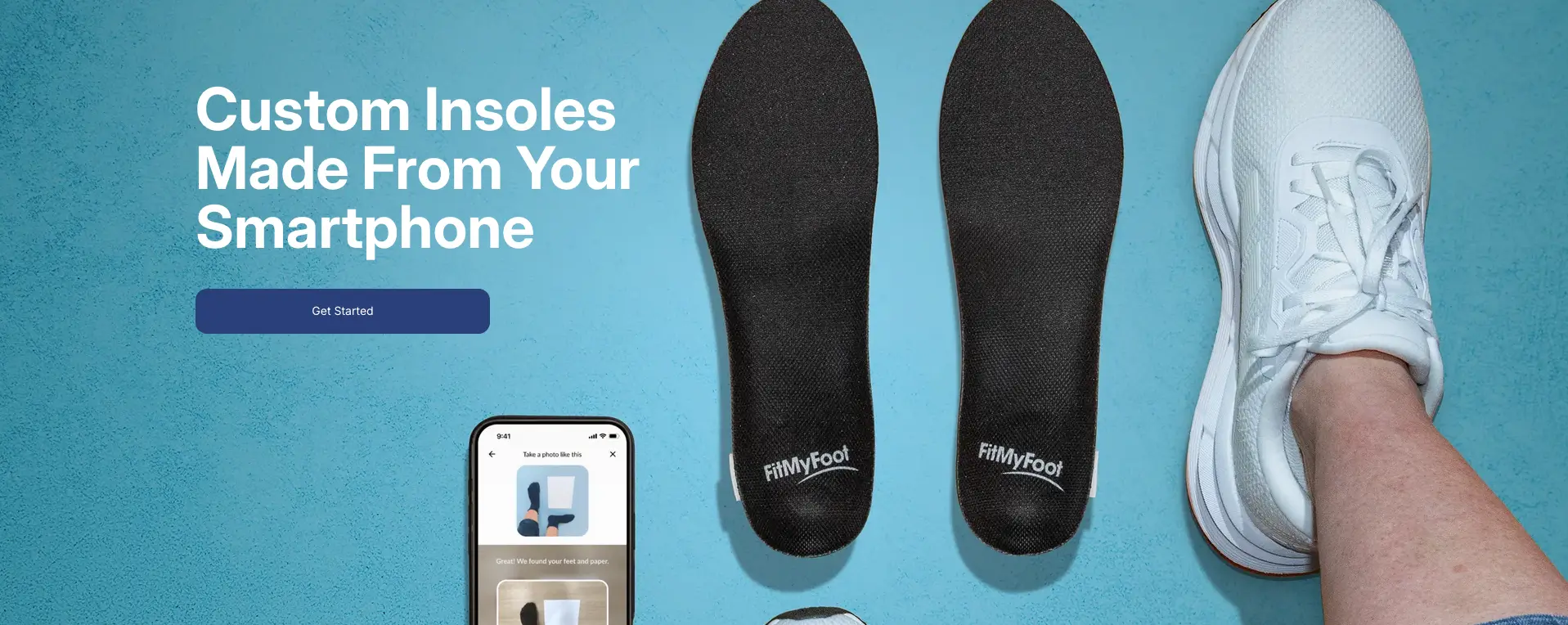
Clear aligners prove personalization can scale into millions of unique units.
Examples: Invisalign (Align Technology)Hearing aids have used precision-fit manufacturing for years because comfort depends on it.
Examples: Phonak, Signia, Starkey
Apparel + Wearables
Apparel mass personalization is growing because standard sizing creates friction and returns.
Made-to-measure apparel is becoming scalable with digital measurement and automated pattern generation.
Examples: Indochino, MTailor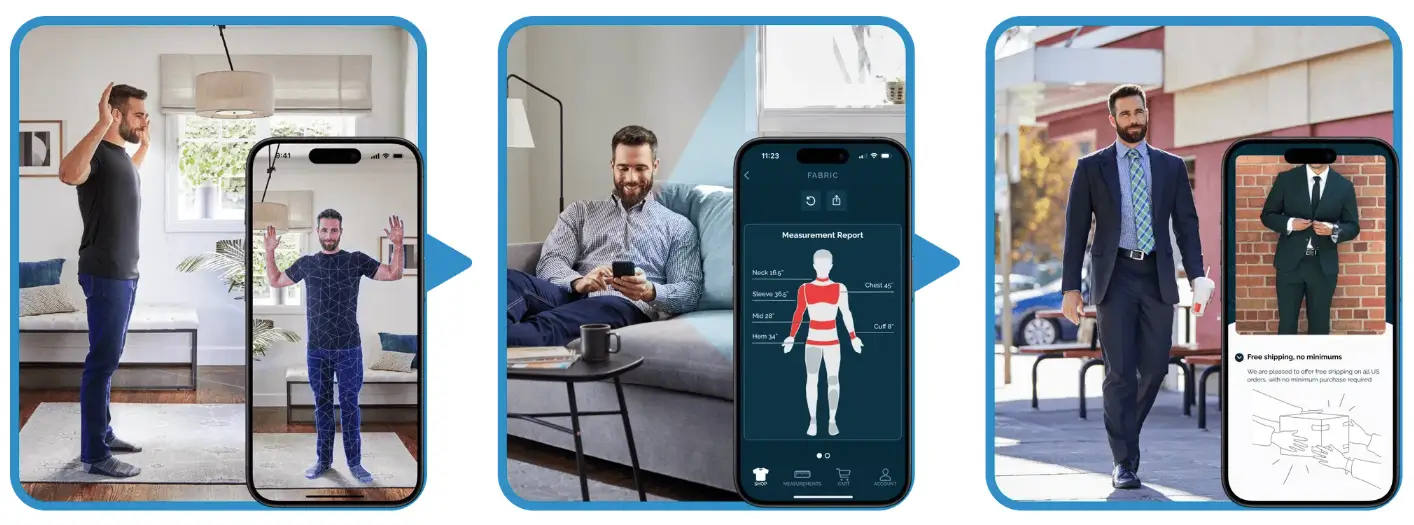
The Era of “Average” Products Is Ending
For decades, manufacturing was built around one goal: produce the same thing as efficiently as possible. That model created incredible scale but it also forced customers into a world of “good enough” fit, “close enough” comfort, and compromises that show up as returns, complaints, and lost loyalty.
Mass personalization flips the equation.
Instead of forcing customers to adapt to the product, mass personalization lets the product adapt to the customer. And with modern data capture, parametric design, product configurator platforms like Kickflip, and flexible manufacturing, one-of-one production is no longer a boutique craft, it’s becoming a real production model.
Frequently Asked Questions
What is mass personalization in manufacturing?
Mass personalization in manufacturing is a production model where each product is tailored to an individual using their specific data (such as body scans, measurements, or performance requirements) while still being produced through standardized, automated processes. Unlike mass customization where customers choose from predefined options, mass personalization automatically generates unique product specifications from individual data inputs.
How is mass personalization different from mass customization?
Mass personalization uses individual data to automatically generate unique product specifications, while mass customization offers customers choices from predefined options. In mass personalization, algorithms determine optimal parameters based on measurements or performance data. In mass customization, customers actively select features they want. Mass personalization typically requires less customer effort but more sophisticated design and manufacturing systems.
How can manufacturers move from manual personalization to mass personalization?
The transition requires building four key capabilities: automated data capture systems (replacing manual measurements), parametric design tools (replacing custom CAD work), flexible manufacturing equipment (handling product variation), and integrated digital workflows (eliminating manual handoffs).
What technologies are required to support mass personalization at scale?
Mass personalization requires data capture technologies (3D scanners, sensors, mobile apps), a product configurator platform like Kickflip to validate inputs and generate production-ready specs, parametric CAD systems for automated design generation, flexible manufacturing equipment (3D printers, CNC machines, robotics), and integrated software systems (PLM, MES, ERP) to manage the digital thread from engineering through production, quality control, fulfillment, and shipping.
When does mass personalization make business sense compared to standard manufacturing?
Mass personalization makes sense when individual variation significantly impacts product performance, comfort, or satisfaction, and when customers will pay premiums for personalized solutions. It's most valuable for fit-critical products (medical devices, apparel, protective equipment), performance-critical applications (athletic gear, tools), and markets where personalization creates sustainable competitive advantages that are difficult for competitors to replicate quickly.
Future reading
Benefits of Personalization in eCommerce + 7 Examples in All Stages
The 2026 Ecommerce Customization and Personalization Guide
What is mass customization
Share This article

Written by The Kickflip Team
January 21st, 2026
The Kickflip team is made up of ecommerce specialists, product experts, and engineers behind Kickflip, a product configurator platform for Shopify, WooCommerce, and Wix. Since 2010, we’ve helped thousands of brands scale personalized product experiences, from startups to Fortune 500 companies. On our blog, we share practical insights to help you improve the buying experience and grow your business with product customization.


Maarten Luyckx
Osaka World
The user-friendly interface of Kickflip, combined with excellent customer service, ensured that this project was brought to a successful and beautiful conclusion.
Shopify App Store
May 20, 2021

Marie-Laetitia Rossazza
My Dust Bag
It took me a long time to find the perfect customizer app, and I’m so happy to say that I finally did! Kickflip is truly the best app on the market. The front end and back end are excellent, and the team behind it is incredibly kind and helpful!
Shopify App Store
September 1, 2023

Brad Jurga
All-Star Sporting Goods
Kickflip made everything easy, from designing the builder all the way through launch. We’re designing truly custom equipment for elite baseball players and this platform allows us to have better engagement and excitement around our brand. We’re seeing an instant return.
Shopify App Store
June 16, 2025

Kasper Taylor
CodedInk
My experience with both the product and the support team has been fantastic. The user interface and user experience are excellent. The features are powerful, and the WooCommerce integration is seamless and easy to set up.
G2.com
June 16, 2025

Saber Naceur
Vinylacy
By far, and I truly mean it, the best customizer available on Shopify. It’s easy to understand and manage, offers options for all types of products, and works extremely well. On top of that, it looks beautiful and feels premium. Highly recommended.
Shopify App Store
December 17, 2022

Jesus Guillermo de León Pérez
Dismo
Kickflip is a fantastic tool. It’s super intuitive, easy to use, and packed with capabilities. You don’t have to be an expert or have experience with other products to get started. The support team is also great and very responsive.
Shopify App Store
July 10, 2024

Frieder Urban
Era of Arc
We were looking for an uncomplicated configurator that was quick and easy to set up, offered plenty of design options, and worked reliably with fast loading times. We tested many configurators on the market, and with Kickflip, we found exactly what we needed.
Shopify App Store
October 10, 2024

John Taggart
Jack Harry and Ollie
What a great addition to our business Kickflip has been. It’s been fantastic to offer our customers the ability to personalize their orders. The support has been excellent, and we especially love that the pricing is tied to our success as customers make purchases.
Shopify App Store
May 7, 2021

TJ Garske
The Net Return
Kickflip saves our team a ton of time by eliminating the need to create custom mockups for customers. Customers can build their product themselves and place an order instantly, without any back-and-forth.
G2.com
January 26, 2026

Amin Hasani
CURVD
After extensive research into product customizer tools, we chose Kickflip for many reasons. We don’t like complicating simple tasks for customers, and Kickflip helped us simplify the process and create a seamless customer experience.
Shopify App Store
July 29, 2025