Why Your Ecommerce Store Gets Traffic but No Sales (10 Conversion Killers)
Written by Marie Lamonde
April 16th, 2026

Table Of Contents
- What are ecommerce conversion killers
- 1. Weak or confusing value proposition
- 2. Poor product pages that don’t help people decide
- 3. Weak trust signals
- 4. Slow site speed
- 5. Poor UX and navigation
- 6. Weak calls to action
- 7. Poor mobile experience
- 8. Unexpected costs at checkout
- 9. Checkout friction
- 10. No urgency
- Extra: Lack of personalization
- The bigger picture
- More traffic won’t fix a leaky funnel
Getting traffic is only half the job.
Many ecommerce brands invest heavily in SEO, ads, and social media. Sessions go up, product views increase, but sales don’t follow. At that point, the issue isn’t visibility. It’s conversion.
This is where things get misunderstood. When people don’t buy, it’s tempting to blame pricing, traffic quality, or timing. Sometimes those are factors. More often, the real issue is friction inside the experience itself.
Something is making shoppers hesitate.
These friction points are what we call conversion killers. They are rarely dramatic on their own, but together they quietly reduce your ability to turn interest into revenue.
What are ecommerce conversion killers
A conversion killer is anything that interrupts buying momentum.
Most stores don’t have one major flaw. Instead, they have multiple small leaks across the journey. A bit of confusion here, a bit of doubt there, and suddenly a motivated shopper becomes an abandoned session.
In practice, these issues tend to fall into four buckets: clarity, trust, experience, and friction. If any of those break down, conversion suffers. Here are the 10 most common conversion killers and how to get rid of them.
1. Weak or confusing value proposition
If shoppers don’t understand why your product matters, they won’t stay long enough to consider it.
A strong value proposition should immediately answer three questions: what is this, who is it for, and why is it better. When messaging is vague or generic, visitors are forced to figure it out themselves. Most won’t bother.
This is especially critical in competitive markets. If your positioning sounds interchangeable with every other store, your product becomes easy to ignore. Clarity, on the other hand, reduces hesitation and helps people move forward faster.
2. Poor product pages that don’t help people decide
Product pages are where conversion happens. Or doesn’t.
A weak product page doesn’t give shoppers enough confidence to buy. It shows the product, but doesn’t fully explain it. It lists features, but doesn’t translate them into real value.
The biggest issue is unanswered questions. Shoppers want to understand what they’re getting, how it looks in detail, and whether it fits their needs. If they have to guess, they hesitate.
This becomes even more important with customizable products. Static images and short descriptions don’t cut it when the final result depends on user choices. The more uncertainty there is, the lower the likelihood of conversion.
I recently wrote a guide on how to create a high converting product page with examples that you can use to find inspiration.
3. Weak trust signals
Trust is often the hidden reason behind low conversion.
When something feels incomplete or unclear, shoppers become cautious. That hesitation doesn’t always come from obvious red flags. It often comes from what’s missing.
Strong trust signals include visible reviews, clear policies, real customer photos, and transparent shipping information. These elements reassure visitors that the product and the brand are reliable.
Without them, even interested shoppers may choose to wait, compare, or leave entirely.
4. Slow site speed
Speed directly affects buying behavior.
A slow site breaks momentum. It gives users time to reconsider, get distracted, or lose patience. Even small delays can have a measurable impact on conversion rates.
This is especially noticeable on mobile and in interactive experiences. If pages lag or product visuals take time to update, the experience feels unreliable.
Fast sites keep users engaged. Slow ones create friction before the purchase even begins.
5. Poor UX and navigation
Shopping should feel intuitive.
When users struggle to find products, understand categories, or navigate the site, the experience becomes tiring. And tired users rarely convert.
Common issues include cluttered layouts, unclear menus, and too many competing elements on the page. Instead of guiding the user, the interface creates noise.
This problem is amplified when products involve multiple options or configurations. In those cases, the experience needs to simplify decisions, not complicate them.
Luckily, there are product configurators that enable simple choices with advanced logic and rules.
6. Weak calls to action
Even interested shoppers need direction.
If it’s not clear what to do next, users hesitate. That hesitation often leads to drop-off.
Calls to action should feel natural and obvious within the flow of the page. When they are vague, poorly placed, or overshadowed by other elements, they lose effectiveness.
In more complex journeys like product customization, clear guidance becomes even more important. Each step should feel intentional and easy to follow.
7. Poor mobile experience
Mobile is now the primary shopping environment for many users.
If your site is difficult to use on a phone, you are losing a significant portion of potential conversions. Small usability issues become major blockers on smaller screens.
This includes everything from navigation and readability to product interaction and checkout flow. A good mobile experience is not just a smaller version of desktop. It is designed for simplicity and speed.
8. Unexpected costs at checkout
Pricing surprises break trust instantly.
When additional fees appear late in the process, shoppers feel misled. Even if the total price is reasonable, the experience creates friction.
This is particularly damaging for custom products, where users have already invested time in configuring the item. A sudden price increase at checkout can undo that entire investment. Dynamic pricing directly in your product configuration can solve that issue instantly.
Clear and transparent pricing helps set expectations early and keeps the buying process smooth.
9. Checkout friction
Checkout is where intent turns into revenue.
If the process is too long, confusing, or restrictive, users drop off. Common issues include forced account creation, unnecessary fields, and slow or unclear steps.
The goal is to make completion effortless. Every extra action is an opportunity for the shopper to reconsider.
For customizable products, this stage is even more sensitive. Users need to feel confident that what they designed is accurately reflected before completing the purchase.
10. No urgency
Even interested shoppers delay decisions.
Without a reason to act now, many will postpone the purchase and never return.
Urgency doesn’t need to be aggressive. It can come from clear timelines, limited availability, or production constraints. The goal is simply to make timing visible.
When shoppers understand why acting now matters, they are more likely to follow through.
Extra: Lack of personalization
Many ecommerce experiences are still static.
Shoppers see fixed products with limited interaction. While this works in some cases, it often fails to create strong engagement or emotional connection.
Personalization changes that dynamic. When users can customize a product, they become part of the process. They are no longer just evaluating. They are creating.
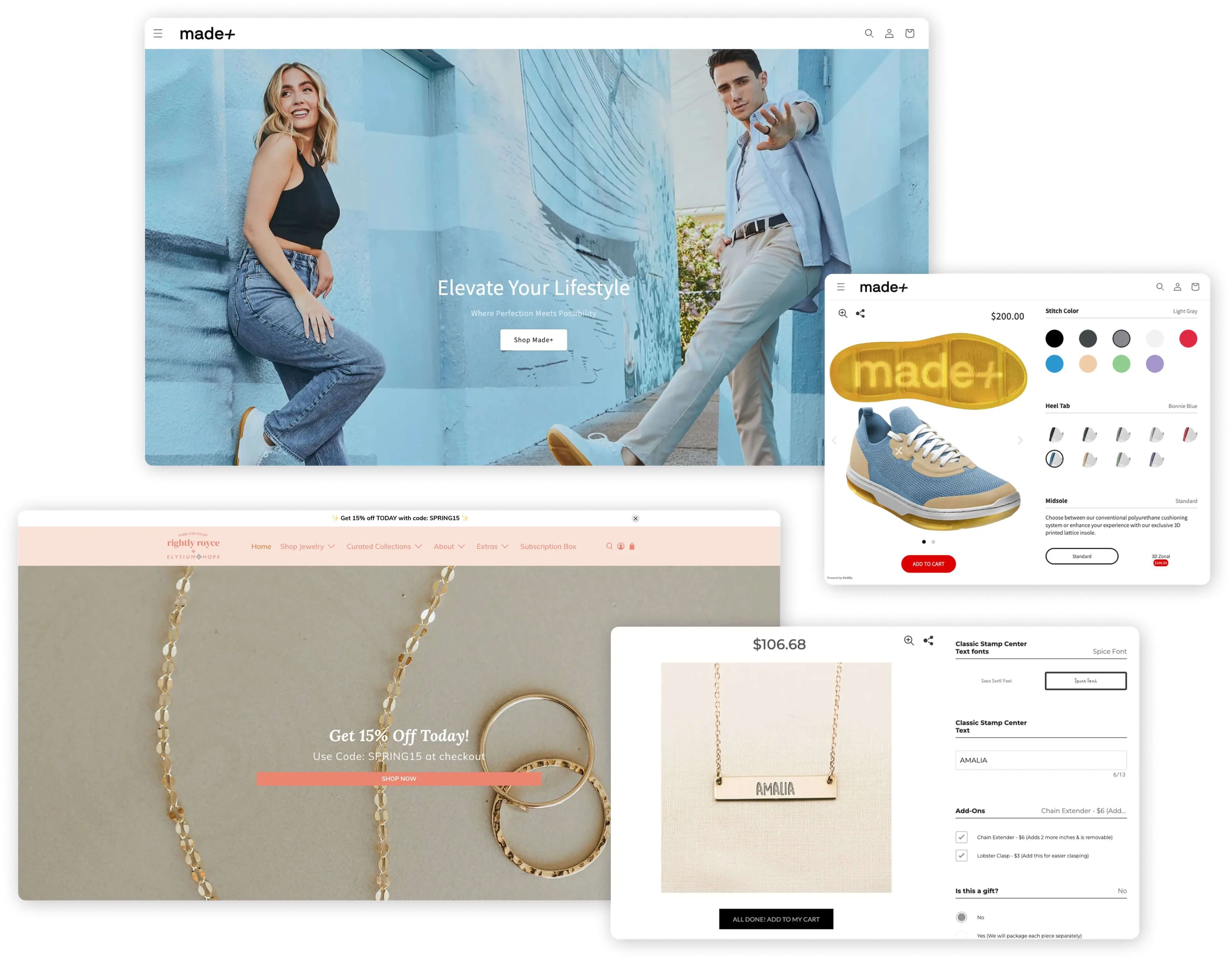
This has a direct impact on conversion. Personalized experiences increase perceived value, reduce uncertainty, and make the product feel more relevant. Instead of imagining the result, shoppers can see it.
For example, designing a custom item or configuring a product visually helps bridge the gap between browsing and buying. It turns abstract decisions into concrete ones.
This is where product customizers play an important role. When the experience is interactive and visual, it builds confidence. Shoppers understand what they’re getting and feel more in control of the outcome.
Kickflip fits into this by enabling that kind of experience. It helps turn product pages into interactive environments where users can personalize items and see results instantly. That added clarity and engagement can significantly improve conversion rates.
The bigger picture
Low conversion is rarely caused by a single issue.
It’s usually the result of multiple small points of friction across the journey. Each one adds a bit of hesitation, and together they stop the sale.
Improving conversion is not about adding more features. It’s about removing doubt, simplifying decisions, and building confidence at every step.
More traffic won’t fix a leaky funnel
If your store gets traffic but not enough sales, the opportunity is already there.
The focus should be on making the experience clearer, faster, and more reassuring. That’s what turns interest into action.
Because in most cases, people aren’t leaving because they don’t want the product.
They’re leaving because something made them unsure.
Time to kill these conversion killers.
Future reading
Ecommerce Conversion Optimization in 2026: 10 Proven Strategies That Actually Work
How to Design a Product Page That Converts (With Examples)
How to Improve Conversion Rate by Avoiding Choice Overload
Share This article

Written by Marie Lamonde
April 16th, 2026
Marie Lamonde is a Content Marketing Manager at Kickflip with 8 years of experience writing about digital marketing, SaaS, and ecommerce. She specializes in creating clear, search-driven content that attracts, engages, and converts.


Maarten Luyckx
Osaka World
The user-friendly interface of Kickflip, combined with excellent customer service, ensured that this project was brought to a successful and beautiful conclusion.
Shopify App Store
May 20, 2021

Marie-Laetitia Rossazza
My Dust Bag
It took me a long time to find the perfect customizer app, and I’m so happy to say that I finally did! Kickflip is truly the best app on the market. The front end and back end are excellent, and the team behind it is incredibly kind and helpful!
Shopify App Store
September 1, 2023

Brad Jurga
All-Star Sporting Goods
Kickflip made everything easy, from designing the builder all the way through launch. We’re designing truly custom equipment for elite baseball players and this platform allows us to have better engagement and excitement around our brand. We’re seeing an instant return.
Shopify App Store
June 16, 2025

Kasper Taylor
CodedInk
My experience with both the product and the support team has been fantastic. The user interface and user experience are excellent. The features are powerful, and the WooCommerce integration is seamless and easy to set up.
G2.com
June 16, 2025

Saber Naceur
Vinylacy
By far, and I truly mean it, the best customizer available on Shopify. It’s easy to understand and manage, offers options for all types of products, and works extremely well. On top of that, it looks beautiful and feels premium. Highly recommended.
Shopify App Store
December 17, 2022

Jesus Guillermo de León Pérez
Dismo
Kickflip is a fantastic tool. It’s super intuitive, easy to use, and packed with capabilities. You don’t have to be an expert or have experience with other products to get started. The support team is also great and very responsive.
Shopify App Store
July 10, 2024

Frieder Urban
Era of Arc
We were looking for an uncomplicated configurator that was quick and easy to set up, offered plenty of design options, and worked reliably with fast loading times. We tested many configurators on the market, and with Kickflip, we found exactly what we needed.
Shopify App Store
October 10, 2024

John Taggart
Jack Harry and Ollie
What a great addition to our business Kickflip has been. It’s been fantastic to offer our customers the ability to personalize their orders. The support has been excellent, and we especially love that the pricing is tied to our success as customers make purchases.
Shopify App Store
May 7, 2021

TJ Garske
The Net Return
Kickflip saves our team a ton of time by eliminating the need to create custom mockups for customers. Customers can build their product themselves and place an order instantly, without any back-and-forth.
G2.com
January 26, 2026

Amin Hasani
CURVD
After extensive research into product customizer tools, we chose Kickflip for many reasons. We don’t like complicating simple tasks for customers, and Kickflip helped us simplify the process and create a seamless customer experience.
Shopify App Store
July 29, 2025